

Blog
Official Website
Reverence Hotels History and Heritage of Mallorca: A Journey Through Time in Mallorca
History and Heritage of Mallorca: A Journey Through Time
July 09 2026
Culture and Gastronomy 
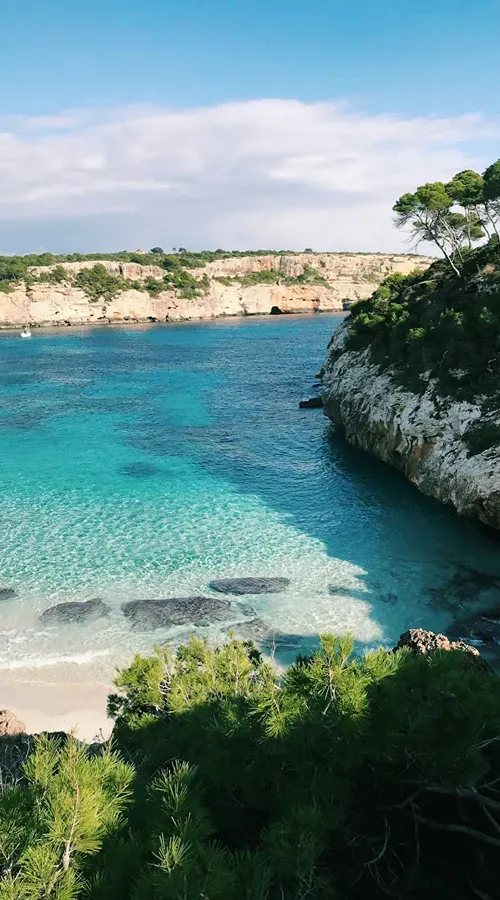
Mallorca is much more than hidden coves and great weather. The island preserves centuries of history in its stones, paths, and traditions. From Reverence Hotels we invite you to discover the island's other side: its deepest soul, woven over thousands of years. This journey through the history of Mallorca and its cultural heritage is perfect for those who want to connect with the past while enjoying the present.
All of this is within easy reach of our hotels, including Reverence Mare in Palmanova , Reverence Life in Santa Ponsa and the > Casa Vida Apartments, also in Santa Ponsa, both locations belonging to the municipality of Calvià.
A Legacy That Begins in Prehistory
The island's first inhabitants left their mark more than 3,000 years ago. Megalithic structures such as talayots, taulas and navetas are among the oldest and most enigmatic remains found in the archaeological sites of Mallorca. The Ses Païsses archaeological site, in Artà, and the Capocorb Vell Talayotic settlement, in Llucmajor, offer a fascinating glimpse into the lives of these ancient communities, surrounded by rituals, cyclopean stones, and defensive structures.
Roman Times and Byzantine Influence
The island was conquered by the Roman Empire in 123 BC and renamed Balearis Major. From this period, visitors can still explore remains such as the Roman Theatre of Pollentia, in Alcúdia, as well as the ruins of ancient rural villas scattered across the island. Later, Byzantine influence left its mark through small rural basilicas, such as Son Peretó, in Manacor.
Islamic Mallorca: Al-Andalus in the Mediterranean
Between the 10th and 13th centuries, Mallorca was part of the Islamic world. It was a period of agricultural and cultural flourishing. Although many remains were destroyed after the Christian conquest, important landmarks still survive, such as the href="https://www.mallorca.es/es/-/banos-arab-1” rel="nofollow"> Arab Baths of Palma, a peaceful oasis hidden within the old town, as well as the winding layout of some streets in the historic centre.
The Christian Conquest and Gothic Splendour
In 1229, King Jaume I conquered the island for the Crown of Aragon, marking the beginning of a new era. This period gave rise to some of the most important monuments in the cultural heritage of Mallorca, including the Cathedral of Palma, Bellver Castle and the Royal Palace of La Almudaina. Its austere yet majestic Gothic architecture continues to define the skyline of the capital.
Museums in Mallorca: Guardians of Memory
The island boasts an outstanding network of museums that help visitors better understand its rich and complex history. Some of the must-see museums include:
• Museu de Mallorca, housed in a former Baroque palace in Palma, featuring archaeological, ethnological, and artistic collections.
• The Es Baluard Museum, dedicated to modern and contemporary art, located atop the Renaissance city walls.
• The Fundació Pilar i Miró Mallorca, preserving the artist's studios and works in an intimate and inspiring setting.
• The Manacor History Museum, showcasing Roman and Talayotic artefacts.
• And smaller local gems such as the Muro Parish Museum and the Pollença Museum.
Routes, Villages and Living Traditions
Beyond its monumental buildings, the history of Mallorca can also be experienced by wandering through its villages. Cobbled streets, Gothic churches, stately homes, and traditional festivals keep the island's identity alive. In places such as Sóller, Artà, Alcúdia and Valldemossa, every corner has a story to tell.
At Reverence Hotels we encourage our guests to discover this deeper side of the island. Our team will be delighted to help you organise visits, recommend museums, or create personalised historical routes.
Because discovering Mallorca also means looking back to understand what undoubtedly makes it so special today.
Volver
All of this is within easy reach of our hotels, including Reverence Mare in Palmanova , Reverence Life in Santa Ponsa and the > Casa Vida Apartments, also in Santa Ponsa, both locations belonging to the municipality of Calvià.
A Legacy That Begins in Prehistory
The island's first inhabitants left their mark more than 3,000 years ago. Megalithic structures such as talayots, taulas and navetas are among the oldest and most enigmatic remains found in the archaeological sites of Mallorca. The Ses Païsses archaeological site, in Artà, and the Capocorb Vell Talayotic settlement, in Llucmajor, offer a fascinating glimpse into the lives of these ancient communities, surrounded by rituals, cyclopean stones, and defensive structures.
Roman Times and Byzantine Influence
The island was conquered by the Roman Empire in 123 BC and renamed Balearis Major. From this period, visitors can still explore remains such as the Roman Theatre of Pollentia, in Alcúdia, as well as the ruins of ancient rural villas scattered across the island. Later, Byzantine influence left its mark through small rural basilicas, such as Son Peretó, in Manacor.
Islamic Mallorca: Al-Andalus in the Mediterranean
Between the 10th and 13th centuries, Mallorca was part of the Islamic world. It was a period of agricultural and cultural flourishing. Although many remains were destroyed after the Christian conquest, important landmarks still survive, such as the href="https://www.mallorca.es/es/-/banos-arab-1” rel="nofollow"> Arab Baths of Palma, a peaceful oasis hidden within the old town, as well as the winding layout of some streets in the historic centre.
The Christian Conquest and Gothic Splendour
In 1229, King Jaume I conquered the island for the Crown of Aragon, marking the beginning of a new era. This period gave rise to some of the most important monuments in the cultural heritage of Mallorca, including the Cathedral of Palma, Bellver Castle and the Royal Palace of La Almudaina. Its austere yet majestic Gothic architecture continues to define the skyline of the capital.
Museums in Mallorca: Guardians of Memory
The island boasts an outstanding network of museums that help visitors better understand its rich and complex history. Some of the must-see museums include:
• Museu de Mallorca, housed in a former Baroque palace in Palma, featuring archaeological, ethnological, and artistic collections.
• The Es Baluard Museum, dedicated to modern and contemporary art, located atop the Renaissance city walls.
• The Fundació Pilar i Miró Mallorca, preserving the artist's studios and works in an intimate and inspiring setting.
• The Manacor History Museum, showcasing Roman and Talayotic artefacts.
• And smaller local gems such as the Muro Parish Museum and the Pollença Museum.
Routes, Villages and Living Traditions
Beyond its monumental buildings, the history of Mallorca can also be experienced by wandering through its villages. Cobbled streets, Gothic churches, stately homes, and traditional festivals keep the island's identity alive. In places such as Sóller, Artà, Alcúdia and Valldemossa, every corner has a story to tell.
At Reverence Hotels we encourage our guests to discover this deeper side of the island. Our team will be delighted to help you organise visits, recommend museums, or create personalised historical routes.
Because discovering Mallorca also means looking back to understand what undoubtedly makes it so special today.


